
The Cosmic Journey: Moissanite’s Origins and History
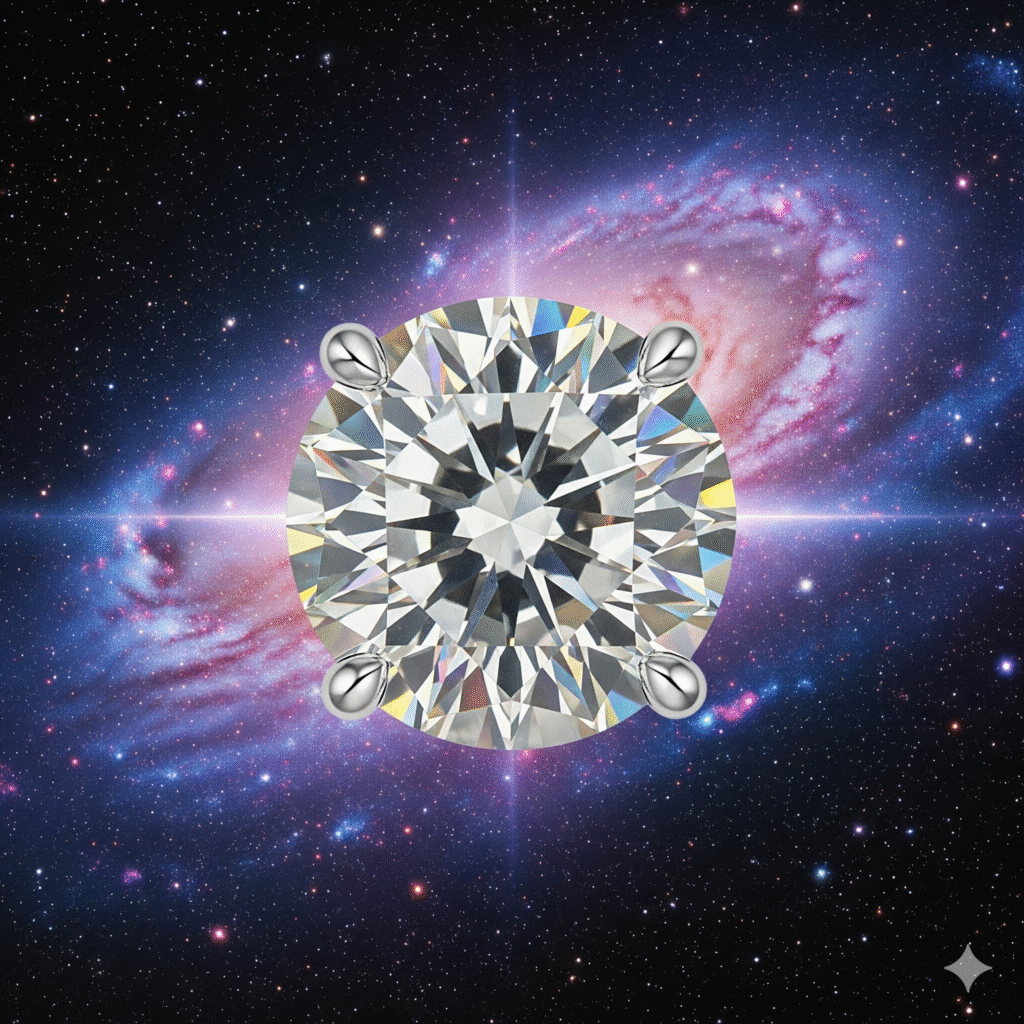
Every gemstone tells a story, but few can claim an origin as dramatic and otherworldly as moissanite. This isn’t a gem born of the earth’s fiery core like a diamond, but one that fell from the heavens in a flash of cosmic brilliance. It’s a tale of scientific discovery, mistaken identity, and a human-driven innovation that transformed a piece of space debris into a luxurious, ethical, and accessible gemstone. The journey of moissanite from a meteor crater to a stunning piece of moissanite jewelry is a testament to both nature’s marvels and human ingenuity.
In this article, we’ll embark on a historical journey to trace the fascinating story of moissanite, from its serendipitous discovery over a century ago to its modern-day status as the best modern age alternative for diamond engagement rings. We will delve into how this “star-born” mineral came to be the beloved, brilliant gem it is today.
A Discovery Out of This World: The Canyon Diablo Meteorite
The year was 1893. In the dusty landscape of Canyon Diablo, Arizona, a Nobel Prize-winning French chemist named Dr. Henri Moissan was examining rock samples from a massive meteor crater. This immense, 50,000-year-old crater was the impact site of a prehistoric meteor, and within its fragments, Dr. Moissan made an astonishing discovery. He found tiny, shimmering crystals that dazzled with a remarkable sparkle.
Initially, he believed he had stumbled upon a new vein of diamonds, the hardest substance known to man. After all, what else could possess such a high degree of fire and brilliance? However, it would take him over a decade to correctly identify the crystals. In 1904, through meticulous scientific analysis, he realized he had found something entirely new: a mineral composed of silicon carbide (SiC). In 1905, in honor of his groundbreaking work, the new mineral was named moissanite.
From Scientific Rarity to Gemological Reality
For over 100 years, natural moissanite remained one of the rarest minerals on Earth. Its only known sources were tiny, microscopic inclusions found in a handful of kimberlite deposits (the rock where diamonds are found) and, most notably, in meteorites. The quantities were so minute that they were scientifically significant but completely unusable for jewelry. The idea of crafting a moissanite engagement ring from a natural specimen was, quite simply, an impossibility.
This rarity made moissanite a tantalizing subject for scientists. The mineral’s unique optical properties, particularly its high refractive index and durability, made it a valuable candidate for industrial applications, but its potential as a beautiful gemstone was unmistakable. The challenge was to recreate it.
The Breakthrough: A Gem is Born in the Lab
The true birth of moissanite jewelry as we know it today occurred in the late 20th century. Scientists at a North Carolina-based research company, now known as Charles & Colvard, perfected a complex and proprietary thermal growing process. This process meticulously recreates the extreme pressure and heat found in nature to produce large, single crystals of silicon carbide. The result was a gemstone identical in composition to its celestial counterpart but created in a controlled, ethical, and sustainable environment.
This lab-grown moissanite was a triumph of scientific innovation. It provided a consistent, high-quality supply of stones that could be cut and polished into magnificent gems. In the 1990s, the first moissanite stones were introduced to the jewelry market, offering a brilliant, beautiful, and conflict-free alternative to traditional diamonds. This new lab-grown diamond alternative was met with great enthusiasm by consumers seeking both beauty and value.
A Legacy of Quality and Conscience
The history of moissanite is not just about its origins; it’s also about its evolution into a gemstone of unparalleled quality. The ability to grow moissanite in a lab allows for precise control over its characteristics. This is how we can consistently produce D colorless moissanite that is flawless to the naked eye and boasts a VVS1 Clarity moissanite grade. The superior cut, known as a brilliant excellent cut moissanite, is also a direct result of these controlled conditions, ensuring every facet maximizes the stone’s unique fire.
Today, the moissanite vs diamond debate often comes down to personal values. Moissanite is a choice for those who want a gemstone that is not only physically stunning and incredibly durable but also ethically and environmentally responsible. It is a modern gem for a modern consumer, offering luxury without compromise. Its rich history—from a cosmic discovery to a laboratory masterpiece—makes every piece of moissanite jewelry a conversation starter and a testament to an incredible journey.
Conclusion: A Story Worn on Your Finger
The moissanite gemstone is more than just a beautiful adornment; it is a piece of history, a relic from the stars, and a symbol of human innovation. Its journey from a rare mineral found in a meteor to a coveted gemstone worn by millions around the world is truly remarkable. By choosing moissanite, you are not just selecting a piece of jewelry; you are embracing a legacy of cosmic origin, scientific achievement, and ethical responsibility. Experience the unparalleled brilliance and captivating history of moissanite for yourself.